


Serengeti National Park
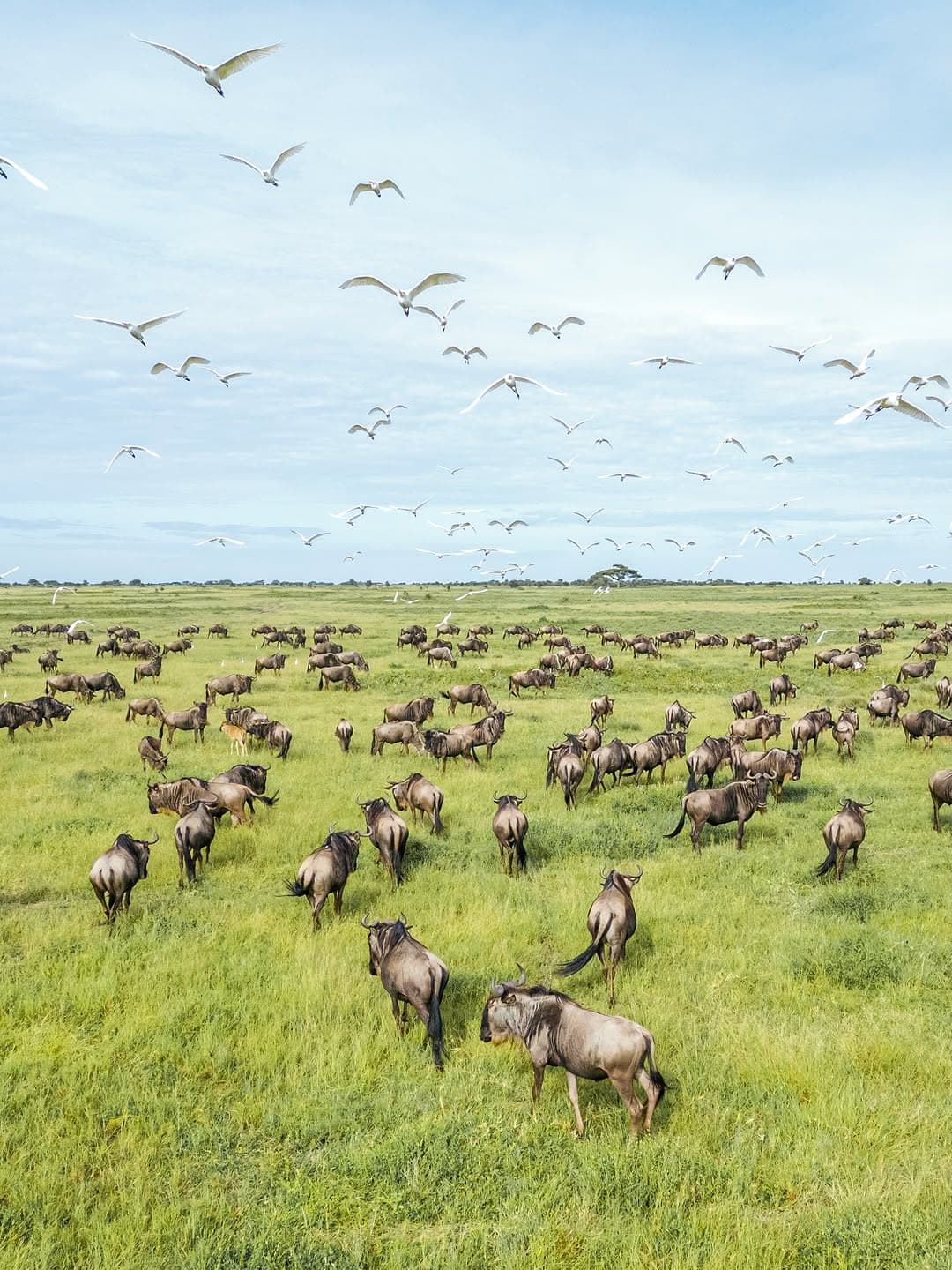
Serengeti National Park in Tanzania is one of Africa's most iconic safari destinations, famed for the Great Migration, the opportunity to see the big cats, and the sheer scale of the plains which stretch right to the horizon.
Serengeti National Park at a Glance
- Country: Tanzania, East Africa
- Region: Northern Tanzania, adjoining the Ngorongoro Conservation Area and Kenya's Maasai Mara ecosystem
- Size: Approximately 14,763 square kilometers (5,700 square miles)
- Established: 1951; UNESCO World Heritage Site since 1981
- Main gateway: Arusha, with Kilimanjaro International Airport serving international arrivals
- Best-known wildlife: Wildebeest, zebra, lion, leopard, cheetah, elephant, buffalo, and more than 500 bird species
Where is Serengeti National Park located?
Serengeti National Park in Africa (northern Tanzania) runs from the short grass plains around Ngorongoro to the Mara River at the Kenyan border. The main areas are Seronera, the Western Corridor and the remote north.
Arusha is the standard safari departure point. Karatu is a sensible overnight stop on the eastern route; Mugumu and Mwanza are the routes from the northwest and west, respectively. From Arusha, it is about 255 km (158 miles) to Naabi Hill Gate and 305-325 km (190-202 miles) to Seronera, depending on the route.
Kilimanjaro International Airport is about 55-60 km (34-37 miles) east of Arusha, so it is about an hour by road. Dar es Salaam is some 1,000km (620 miles) from central Serengeti by road, so flying is by far the most sensible option.
History and Conservation of the Serengeti
The Serengeti gets its name from a Maasai expression (Siringet) which is generally understood to mean "endless plains". It is one of the great mammal migration areas in the world.
An early game reserve was set up in 1929, and Serengeti National Park was established in 1951. Ngorongoro became a separate conservation area in 1959. Serengeti was inscribed as a UNESCO World Heritage Site in 1981 for its exceptional ecosystems and the wildlife spectacle.
Today, the park is managed by the Tanzania National Parks Authority (TANAPA). Conservation objectives are focused on anti-poaching, habitat and migration corridor protection, and tourism management. The wider ecosystem spills into the Maasai Mara in Kenya.
How to Get to Serengeti National Park
By Road from Arusha
The vast majority of overland safaris take the Arusha–Karatu–Ngorongoro–Naabi Hill route. The drive to Naabi Hill itself is usually 6-7 hours, with another 1-2 hours to get to the central Serengeti lodges. Of course, the actual times will vary depending on the stops you make and the state of the roads.
A private 4x4 safari Land Cruiser is ideal for the gravel tracks. You will be spending the night in Karatu or just outside Ngorongoro Crater quite a bit. Ngorongoro transit is an additional charge to the Serengeti fees.
Visitors coming in from Mwanza can enter via Ndabaka Gate (about 150km/93 miles from the city), which is ideal for Western Corridor itineraries.
By Air
International flights will generally arrive at Kilimanjaro International Airport (JRO). Scheduled light aircraft will then land at the appropriate bush airstrips depending on your lodge and the time of year.
From Dar es Salaam's Julius Nyerere International Airport (DAR), you can fly either via Arusha or on one of the selected through routings. Allow for connection times and be aware of the soft baggage limits (usually around 15kg/33lbs), which will be at the airline's discretion.
Serengeti Airstrips and Lodge Transfers
Selecting the correct airstrip matters because the park is enormous. The most useful arrival points include:
- Seronera Airstrip (Central Serengeti) serves the Four Seasons Safari Lodge, Meliá Serengeti Lodge, Serengeti Serena, and a number of the tented camps. Flights from Arusha typically take around 1-1.5 hours (depending on how many stops you make).
- Kogatende Airstrip: Northern Serengeti, near the Mara River safari areas (convenient for Sayari Camp and Lemala Kuria Hills). 2-3 hours from Arusha on many shared routings.
- Lobo Airstrip (Northeastern Serengeti) is suitable for lodges and camps in the Lobo area. Travel time is typically 1.5 to 2.5 hours from Arusha.
- Grumeti/Kirawira Airstrip (Western Corridor) is useful for getting to the various accommodation options along the Grumeti River. The flight time will, of course, vary depending on the number of stops made during the day.
- Kusini (southern sector airstrips) are useful for southern plains safaris when you're operating from and accessible from them. Ndutu Airstrip is located just outside the park, within the Ngorongoro Conservation Area.
- Transfers can take anywhere from a few minutes to over an hour. It is absolutely vital that you confirm the landing strip, the transfer arrangements, the days on which they operate, and the exact length of the flight with both your lodge and your airline prior to buying the tickets.
Wildlife, Attractions, and Safari Activities
The Serengeti National Park is full of wildlife beyond the migration. Seronera, with its riverine vegetation, is good for leopards and lions. The open plains are good for cheetahs, and the kopjes (the granite outcrops) are good for predators to sit and watch.
- Morning and afternoon game drives where you will explore a range of habitats with an experienced local guide, watching the hunting behavior of the big cats, the grazing herds and the elephants moving between water sources.
- Great Migration viewing: Track the wildebeest and zebra movements across the southern plains, Western Corridor and the Mara River area according to the seasonal rains.
- Hot air balloon safaris: view the grasslands from above at sunrise in the designated operating areas, with a bush breakfast available where offered.
- Birdwatching: look out for secretary birds, kori bustards, ostriches, rollers, raptors and wetland birds, over 500 species recorded.
- Guided walking safaris: only in the authorized areas with approved guides and ranger arrangements. Walking freely from a lodge or vehicle is absolutely prohibited.
- Landscape: golden grasslands, acacias, hippo pools, rock formations, especially in soft early or late light.
- Night game drives and off-road driving are not part of the normal offering in the park. Any such activity would require special permission and would have to be done in strict accordance with the rules for that particular area.
Luxury Accommodations Inside Serengeti National Park
Accommodation largely depends on the wildlife season and the type of experience you are after. The properties listed are all within the national park rather than in the adjacent private reserves.
- Four Seasons Safari Lodge Serengeti (Central Region): A full-service luxury lodge with villas, spa and views over an active wildlife waterhole. Definitely the type of place you'd go if you wanted the facilities of a hotel.
- Meliá Serengeti Lodge (Meliá Collection - Central Region): Contemporary lodge with an infinity pool and fantastic savanna views. Ideal for couples and families who want a bit of comfort between the game drives.
- Serengeti Serena Safari Lodge (Central Region): Traditional thatched lodge rooms on an elevated ridge with wide plains views and a swimming pool.
- Namiri Plains (Eastern Serengeti): An intimate, luxury tented camp in some of the most renowned big cat habitat. It's the sort of place that appeals to the wildlife photographer and the guest who is looking for a quieter setting.
- Sayari Camp (Northern Serengeti): Luxury tented camp ideally situated for Mara River trips during the northern migration season. It's very much a camp built around guided wildlife experiences.
Serengeti National Park Entrance Fees
Non-resident adult entry fees for Serengeti National Park are charged on a per 24-hour basis on a seasonal basis. US$70 in the peak season (16th May to 14th March) and US$60 in the low season (15th March to 15th May).
For children aged 5 to 15, the base fee is US$20 in the peak season and US$10 in the low season, and children under 5 enter free of charge.
The 18% Tanzanian VAT is added to the adult fee to give a total of US$82.60 (peak) or US$70.80 (low season). Please note that the overnight lodge/camp concession fees (approximately US$59-$71 per adult per night including tax), vehicle entry fees, and Ngorongoro transit charges are all charged separately.
Best Time to Visit Serengeti National Park
The Serengeti rewards year-round visits, but the optimal location changes as rainfall shifts grazing conditions:
- December to March: The southern Serengeti and the adjacent Ndutu plains are full of herds. January and February are particularly renowned for the wildebeest calving and the associated predator activity.
- April-May: Longer rains lead to lush green landscapes, fewer visitors, and lower accommodation rates. The tracks get quite muddy, and some of the mobile camps simply call it a day.
- May to July: The migration herds tend to move northwest through the Western Corridor, though the exact movements will of course vary with the seasonal rains.
- July to October: The northern Serengeti and Mara River area is all about the river crossings. Demand for well-placed camps is extremely high at this time of year.
- Nov/Dec: The short rains push the herds back south again, and the resident wildlife is still very dense in the central Serengeti.
Photography tip
Early morning is ideal (soft light, active predators). A 200-400mm zoom is perfect for wildlife at a distance; a wider lens is good for the big skies and the sweeping herds. Pack a warm layer for the early morning drives, some sun protection, and a camera bag that is dust-resistant.
Plan Your Serengeti Safari with Halo Safaris & DMC
A good safari is all about matching your dates to the right region, lodge, flight, and guide. For a very relaxed first visit, you could do three nights in the central Serengeti. If you are after a migration safari, then you would want to combine central Serengeti with either the northern or southern camps at the right time of year.
Plan your private Serengeti safari with us. Share your travel dates, group size, accommodation preferences, and interests to receive a tailored itinerary with precise airstrips, clear inclusions, and transparent pricing.
Park Overview
Scenes from Serengeti National Park
Frequently Asked Questions
Tell us about the trip.
A destination specialist will respond within one business day with a tailored proposal.
Planning a safari? Use our trip builder to craft a bespoke itinerary instead.