



11NOV
Halo Safaris & DMC Nominated for Best DMC in Kenya
Discover what Halo Safaris & DMC’s Golden Tree Award nominations mean for travelers and partners, and learn about our years of safari expertise in Kenya.
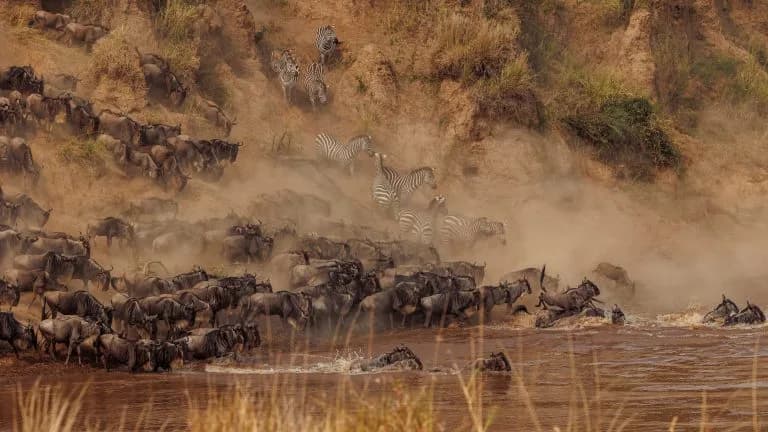
The first thing you notice is the sound. Before you see them, you hear them. A low, endless drumming of hooves and the nasal grunts of wildebeest calling across the plains. Then the horizon fills with a dark ribbon of animals stretching farther than your eyes can follow.
This is the Great Migration, and Kenya's Maasai Mara holds a front-row seat. Each year, roughly 1.5 million wildebeest, along with hundreds of thousands of zebras and gazelles, move in a vast loop between Tanzania's Serengeti and Kenya's Mara in search of fresh grass and water. Predators follow close behind, and the drama that unfolds has earned the migration a place among the world's great natural wonders.
The Great Migration is a continuous, circular journey driven by rainfall. As grass runs out in one area, the herds move to where the rains bring new growth. There is no start or finish line, the cycle simply keeps turning.
The Serengeti hosts the herds for most of the year, including the calving season early in the year, when around 8,000 calves are born each day. Kenya's turn comes in the dry months, when the Mara's grasslands are at their richest, and the herds pour north across the border.
Timing is everything for a wildlife migration safari. The herds usually reach the Maasai Mara between July and October, with the peak months generally being August and September. That said, nature keeps its own calendar, and an early or late rainy season can shift the schedule by several weeks.
Here is a rough guide to the year in the Mara:
If you visit outside the peak season, you will trade massive herds for quieter game drives and lower prices, which many seasoned travelers prefer.
If there is one moment people travel across the world to witness, it's the river crossing. Herds gather nervously on the banks of the Mara River, sometimes for hours or even days. Then a single animal takes the plunge and thousands follow in a chaotic surge of dust, spray and noise.
Below, some of Africa's largest Nile crocodiles wait, while lions and hyenas often lurk on the far bank. It is raw, intense and unforgettable.
A few tips for crossing day:
The Mara steals the headlines, but Kenya hosts other remarkable movements of wildlife:
Where you stay will determine your migration experience as much as when you visit. Camps in the Maasai Mara National Reserve put you close to the river crossings, as private conservancies trade some crossing access for fewer vehicles and more varied activities. Here are standout options for different travel styles.
For peak season, book six to twelve months ahead, as the best camps fill quickly.
Picture yourself on the banks of the Mara River as thousands of wildebeest surge into the water. Our expert guides know where the herds are heading. We handle everything from flights and camps to park fees. The best migration camps fill up months ahead, so don't leave your dream safari to chance.
Plan your migration safari with us today and get a tailored itinerary.
Turn this editorial dispatch into your next adventure with our curated expeditions and sanctuaries.
A destination specialist will respond within one business day with a tailored proposal.
Discover what Halo Safaris & DMC’s Golden Tree Award nominations mean for travelers and partners, and learn about our years of safari expertise in Kenya.
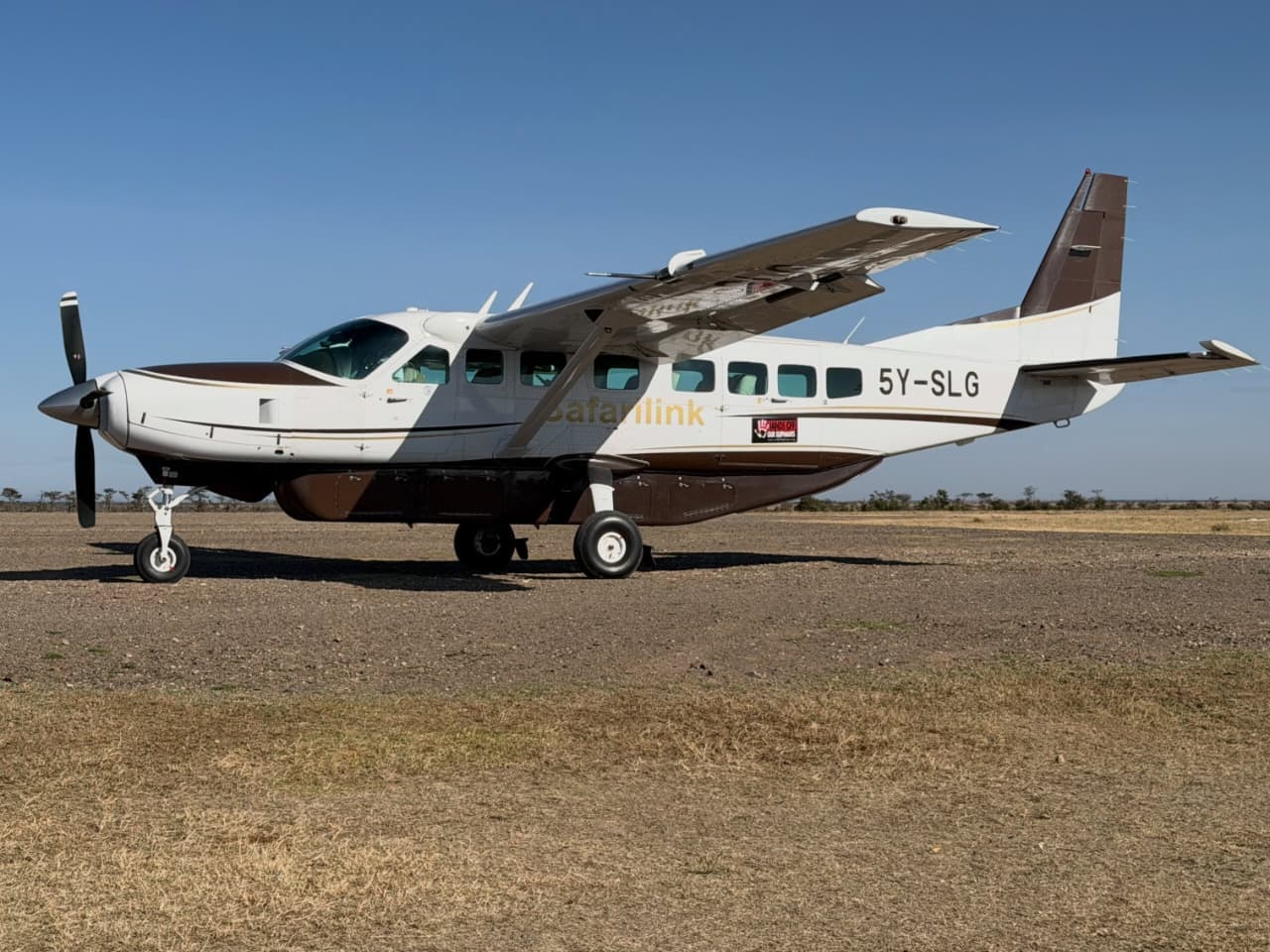
A fly-in safari in Kenya provides a direct link between Nairobi's Wilson Airport (WIL) and bush airstrips in the Maasai Mara, Samburu, Laikipia, and Amboseli through scheduled light aircraft, reducing journeys that normally take five to eight hours by means of flights lasting 45 to 90 minutes. Flying increases the amount of time available for game drives and helps to reduce travel fatigue, but the itineraries have to follow strict luggage limits of 15kg per person for soft-sided bags. Compare fly-versus-drive itineraries, the package inclusions listed item by item, the aircraft's baggage rules, and the private charter alternatives.
As of October 6, 2026, non-Kenyan visitors staying under 12 months must hold mandatory travel health insurance issued under the government-approved scheme. Costing $44 plus processing fees (totaling ~$52 per traveler), the policy provides a $50,000 minimum cumulative coverage limit for medical emergencies, hospitalization, and evacuation. Read this guide to understand ETA portal blocking rules, proof of coverage requirements, foreign policy exceptions, and step-by-step purchase instructions.