


Tsavo East National Park
Experience the Untamed Soul of Tsavo East National Park
Brief Introduction
Imagine seeing elephants dust themselves down with red dust beneath the great African sky, with a river flowing through the open wilderness; Tsavo East National Park offers you a different type of safari, since there are fewer vehicles, the scenery is extensive, and you have the opportunity to see wildlife away from large numbers of people.
Brief History
Tsavo East was founded in April 1948 and is Kenya's biggest national park, with an area of about 13,747 square kilometres (5,308 square miles). The park, along with Tsavo West, which is adjacent to it, makes up the core of a major protected ecosystem.
The Kenya Wildlife Service (KWS) is in charge of the park and at the same time works with conservation partners in order to protect the elephants, the rare species, and the important wildlife corridors.
Location and Getting There
The park lies in southeastern Kenya, extending from Nairobi to the coast near the Indian Ocean, and Voi is a major gateway town. Some of its entry points are Bachuma, Voi, Manyani, and Sala.
- From Mombasa: Bachuma Gate is roughly 110 kilometres (68 miles) by road and should take you about two to three hours, depending on the traffic and where you will be staying.
- From Nairobi: the trip to Voi is about 330 to 350 kilometres (205 to 217 miles) and usually takes between 6 and 8 hours depending on traffic conditions.
- By rail: the Standard Gauge Railway (SGR) in Kenya runs from Nairobi to Mombasa, with a meeting point at Voi Station where a private safari vehicle can meet you. The journey takes about 4 hours and 30 minutes.
- By air: flights from Wilson Airport take between 40 and 50 minutes for direct flights and 1 hour and 25 minutes depending on multiple stops at park airstrips. You will land at either Ikanga or Voi Airstrip.
Wildlife & Terrain
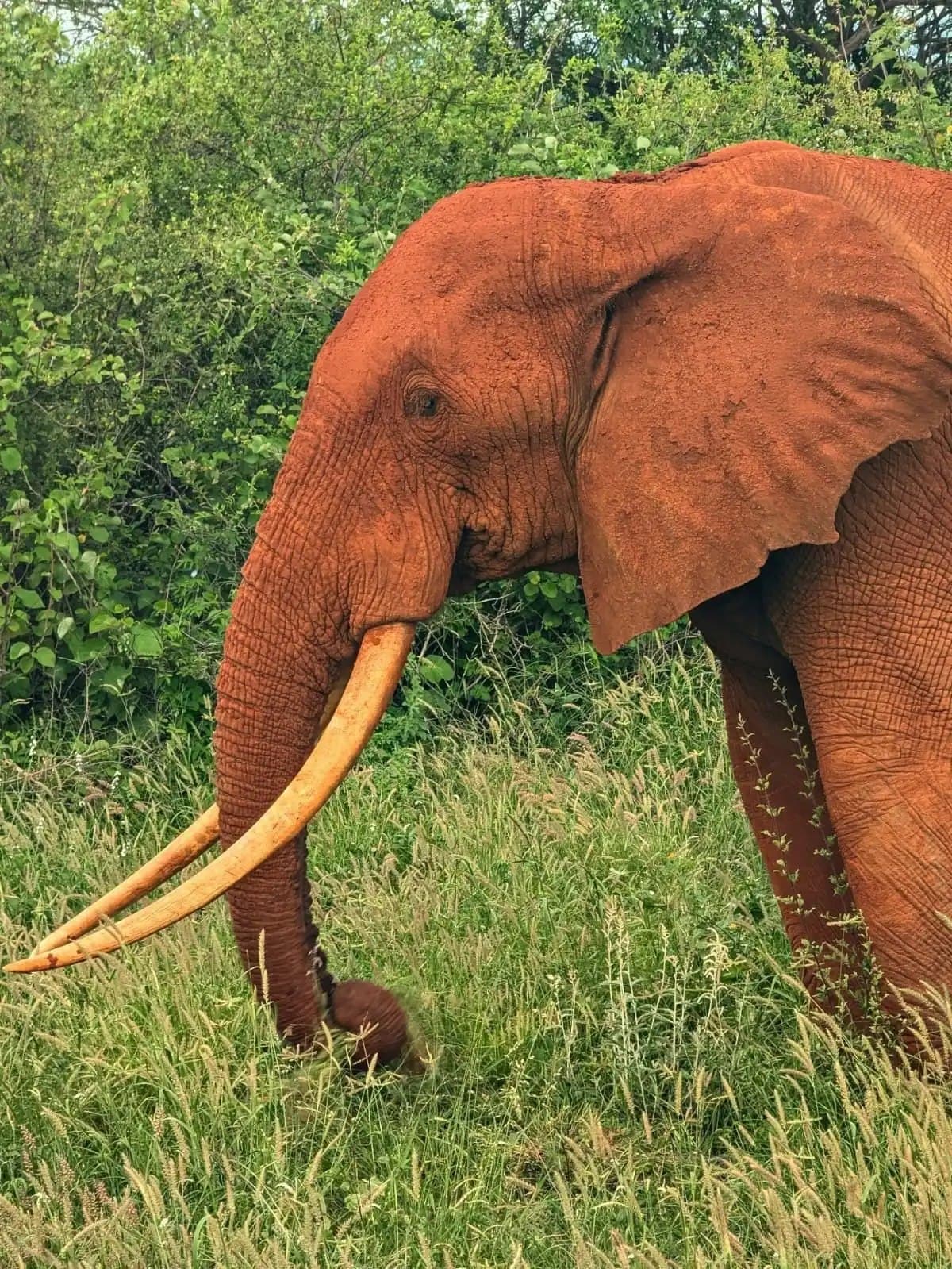
Tsavo East National Park is famous for its elephants, which become a rust-red colour when they dust themselves down with the park's iron-rich soil. The landscape shifts from open savanna and thorny bushes to seasonal rivers, doum palms, and green river corridors.
Typical wildlife highlights include:
- Elephants and plains wildlife: Large elephant herds, buffalo, giraffes, zebras, impalas, and waterbuck.
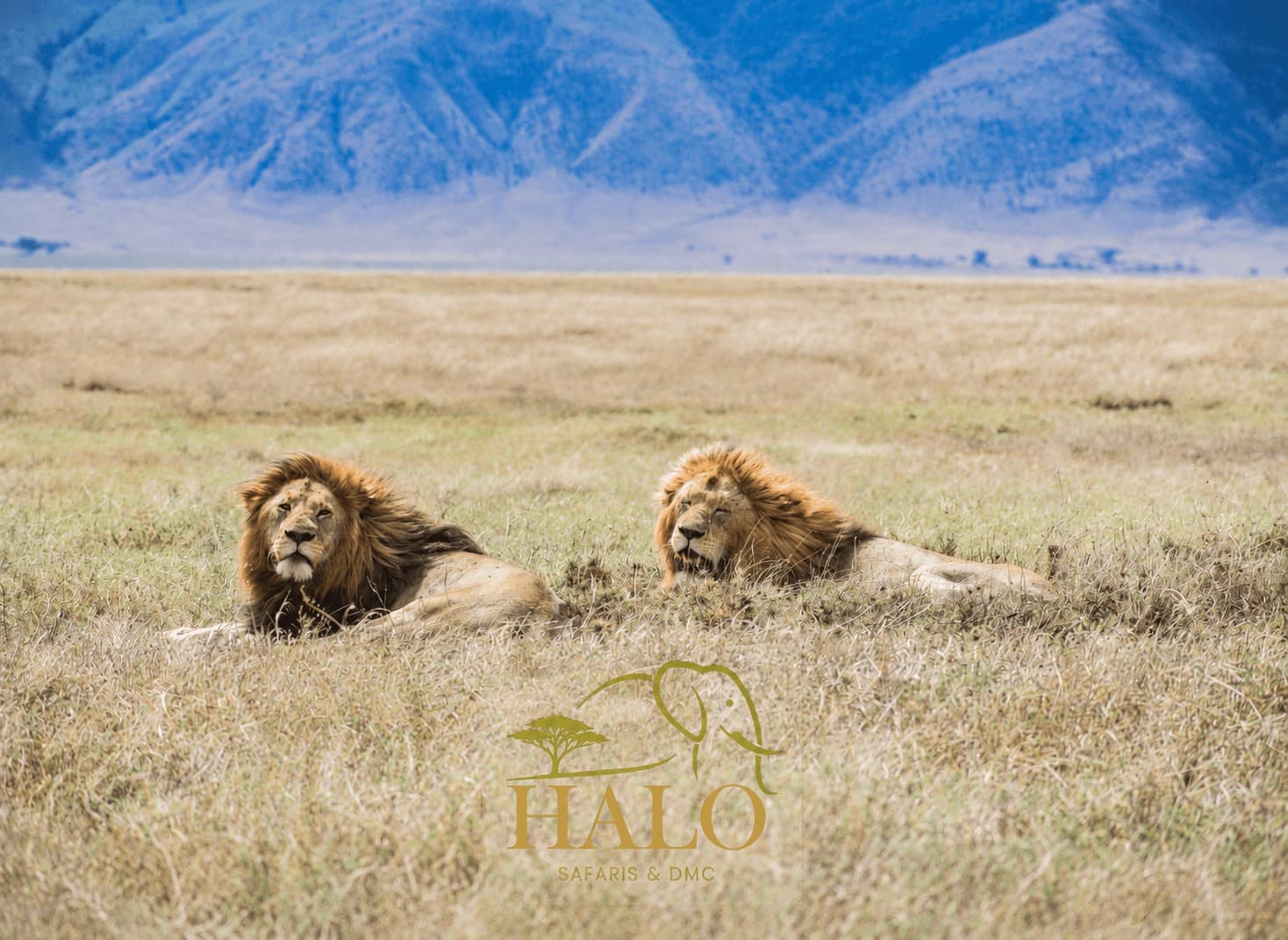
- Big cats: Lions (often with shorter manes suited to the dense thorn scrub), plus less frequently seen leopards and cheetahs.
- Dry-country specialists: Gerenuk and lesser kudu; the critically endangered hirola exists in the wider ecosystem but is exceptionally difficult to spot.
- River life and birds: Hippos, crocodiles, fish eagles, ostriches, rollers, and hornbills among more than 500 recorded bird species.
The Galana River cuts a striking green ribbon across the dry terrain. At Lugard Falls, you can see the rocks shaped by the water, which flows rapidly, and Mudanda Rock offers broad views of the nearby waterholes. Aruba Dam is an excellent place to see wildlife, provided the water levels are suitable. The large Yatta Plateau forms the northern horizon, although in some remote areas extra planning is required to reach them. Since the local animals move in response to rainfall and the availability of water, it is necessary to have a patient and adaptable guide.
Best Time to Visit
From June to October, the tracks are usually drier, the vegetation is thinner, and more wildlife gathers near the remaining water sources. January and February are also good months for viewing game, although the afternoons can be hot.
From March to May, the long rains occur, and in November and December the short rains generally take place. The greener landscape is advantageous for landscape photographers and birdwatchers, even though certain secondary tracks may become muddy.
In quieter months, the cost of lodges is usually lower, but it can increase during holidays.
Activities to Do
- Private game drives: Depart early or late in the afternoon to watch for elephants, predators, and plains wildlife with flexible time at sightings.
- Photographic safaris: Focus on red-dusted elephants, wide-angle scenery, and soft light around the Galana River.
- Birdwatching: Explore riverine vegetation, scrub, and seasonal wetlands with an experienced guide familiar with resident and migratory species.
- Scenic stops: Visit designated viewpoints near Mudanda Rock and Lugard Falls when open, with ranger guidance.
- Authorized walking safaris: The KWS classifies organized walks in Tsavo East as a special activity and requires advance authorization, professional supervision, and extra fees; independent bush walks are forbidden.
- Special nighttime activities: With prior permission, the KWS allows guided night wildlife viewing to be carried out by authorized operators.
- Community visits: Arrange consent-based cultural experiences outside the park with local hosts and fair payment.
Conservancies, Communities & Responsible Tourism
The Tsavo Trust runs two major community conservation projects, the Kamungi Conservancy and the Shirango Community Conservancy, both of which are situated outside the park.
Kamungi Conservancy is located near Mtito Andei in northern Tsavo and is managed by the local community; it aids in the protection of wildlife and in reducing conflicts between people and animals. In order to achieve this, the conservancy carries out ranger patrols, constructs fences that deter elephants, and also supports water projects, education, and sustainable farming. When you stay at Kamungi Bandas, the income is reinvested in local development and conservation.
The Shirango Community Conservancy is situated in the southern part of Tsavo East and is working in collaboration with the local Watha people and those in nearby areas to protect the wildlife and to assist people in earning a living. It carries out wildlife protection, clean water projects, solar energy programmes, education and measures aimed at reducing conflict between people and wildlife, all with the support of the Tsavo Trust.
Entrance Fees
KWS currently publishes the following daily park entry rates for Tsavo East (valid per 24-hour period):
- International non-residents: USD 80 adult; USD 40 child.
- Other African citizens: USD 40 adult; USD 20 child.
- East African citizens: KES 1,000 adult; KES 500 child.
- Kenya residents: KES 1,350 adult; KES 675 child.
What You Can Expect
Warm days, dusty roads, early starts, and long sections of open wilderness. If you stay for two nights, you will have more time for viewing, and three nights will allow you to explore the park at a more relaxed pace.
Take with you light-coloured clothing, a sun hat, sunglasses, closed shoes, something warm for the morning, water, insect repellent, binoculars, and camera equipment with a zoom lens and a dust cover.
It is a good idea to consult a travel clinic regarding malaria precautions, regular vaccines, and the requirements for entry. You should also bear in mind that mobile phone coverage may be poor in remote areas.
The gate is strictly open from 6:00 a.m. to 6:00 p.m., and unless granted permission for particular activities, you have to stay in their vehicles outside the designated safe areas.
Possible Safari Combinations
- Tsavo East and Tsavo West (4–5 days): Contrast red plains and river valleys with volcanic hills, Mzima Springs, and varied wildlife habitats.
- Tsavo East and Amboseli (5–7 days): Pair Tsavo elephants with Amboseli’s wetlands and views of Mount Kilimanjaro.
- Tsavo East and Diani Beach (5–8 days): Combine a two- or three-night wilderness safari with Indian Ocean coastal relaxation.
- Tsavo East, Tsavo West, and Amboseli (7–9 days): A comprehensive southern Kenya circuit with private guiding and lodge stays.
Plan Your Tsavo East National Park Safari with Halo Safaris & DMC
Let the red-elephant wilderness be the highlight of your trip to Kenya. Get in touch with us today to plan a private Tsavo East safari with an expert driver-guide, a carefully chosen accommodation, road, rail, or charter travel. You can share your travel dates, group size, and preferences through our form, email, or call +254 762 444 777 for a custom itinerary and clear pricing.
Cuándo ir
Year-round game viewing with prime dry season viewing and seasonal migrations.
Enfoque en la vida silvestre
Home to the African Big Five, massive herbivore herds, and exceptional birdlife.
Descripción general del parque
Scheduled bush flights or private road transfers arranged seamlessly by Halo Safaris.
Park conservation fees vary by season and residency. Fully handled in all Halo Safaris packages.
Viajes exclusivos en Tsavo East National Park Safari.
 Temporada LOW
2-Day Tsavo East Safari
This 2-day Tsavo East safari can start in the morning from Mombasa, Diani, Kilifi, or Watamu. Enjoy an afternoon game drive, spend the night at a lodge inside o…
 Temporada LOW
3-Day Tsavo East Safari
During a three-day safari, your guide will drive you across plains covered in red dust, where elephants dust themselves using the park's iron-rich soil. You can…
Campamentos seleccionados y lodges de ultra lujo en Tsavo East National Park Safari.
Ashnil Aruba Lodge
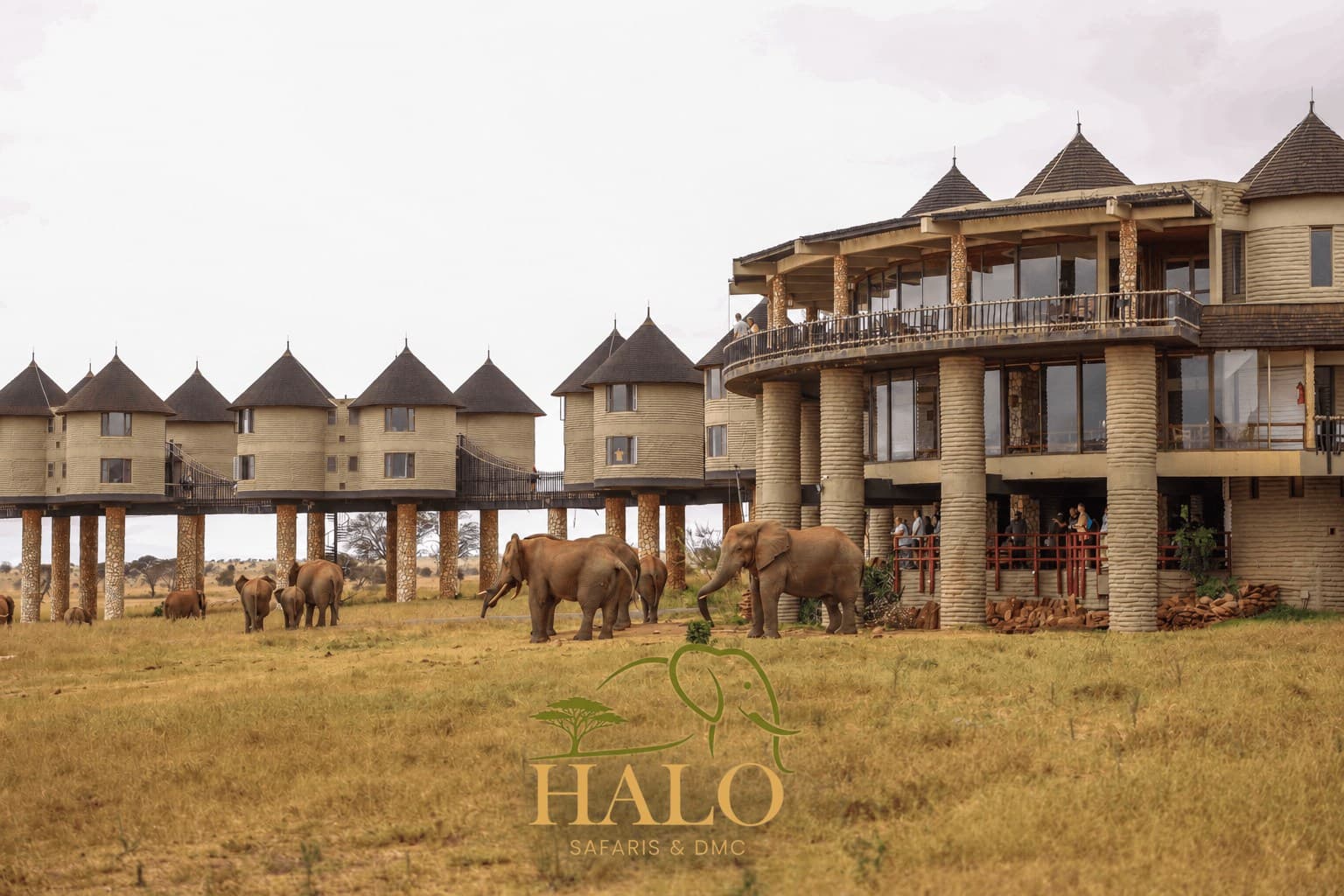
The Ashnil Aruba Lodge is set up right next to a source of water in a park where water is a rare commodity. It lies overlooking the Aruba Dam in southern Tsavo East National Park, where during the dry season the dam functions like a magnet, attracting elephants which go there to drink and buffalo that wallow in the shallow waters, often seen from your veranda.Aruba is a comfortable mid-range lodge operated by the Ashnil Hotels group, and the true luxury it offers is its location, since you wake up deep in the park with the wildlife right outside your door.Even if you are going on safari for the first time, Aruba will be suitable for you. It is also a good choice for couples who would prefer a quiet veranda to one that is crowded with people, for photographers, families, and beach holidaymakers who are leaving Diani or Mombasa for a short stay. However, if you want plunge pools or a spa, then you should select a different luxury lodge.Getting to the lodgeThe lodge is situated approximately 30 km east of Voi Gate, the principal entrance onto the Nairobi to Mombasa highway, and the one-hour drive from the gate marks the start of your first game drive. A road trip of 330 km from Nairobi to Voi Gate takes between five and six hours, whereas the Madaraka Express train gets you to Voi station in about five hours, at which point your guide will be there to drive you into the park. For those coming from Mombasa, the distance is roughly 160 km, or 2.5 to 3 hours by road, and when starting from Diani Beach it takes about four hours via either Mombasa or the Kwale route. If you are short on time, you can take charter flights to the park airstrips as part of our fly safari.Rooms and accommodationThe rooms are spread across the grounds, with many of them facing the dam or the open bush. Each room has a shower that is en-suite, mosquito nets, and a private veranda which is suitable for slow mornings enjoyed with binoculars.Double roomOne large bedCouples, honeymooners and older travelers.Twin roomTwo single bedsFriends, colleagues, parent and teen or two solo guests sharing to avoid the single supplementTriple roomA double and a single, or three singlesA family with one young child or three adults sharing costsFamily accommodationConnecting rooms or a larger unitFamilies of four or more and multi-generation groups; book early for holidaysSingle occupancyDouble or twin for one guestSolo travelers and photographers; a single supplement appliesFacilities and diningThe pool provides a cool break from the heat during the drives, and since the restaurant and bar are situated over the water, you usually get to have lunch with the elephants. Wi-Fi is available in the main areas but doesn't reach the rooms. Although there is a small shop selling curiosities, neither a gym nor a spa is available.Buffet meals combine Kenyan favourites with international dishes and provide for vegetarian, halal, and special diets if asked.Activities and wildlifeMorning and Afternoon Game DrivesHead out into the cool morning air right as the park wakes up, or venture back out in the late afternoon when the light turns gold. Guided by local experts who know the land like the back of their hand, you’ll track Tsavo’s famous brick-red elephants, prides of lions, grazing giraffes, and sneaky big cats.Front seat at Aruba DamYou don't even have to leave the camp to witness the magic. Grab a cold drink and relax on your private veranda, the dining deck, or by the pool as elephants, buffaloes, and endless bird species stroll right up to the water’s edge for a drink.Sundowners at Golden HourAs the day winds down, stop at a scenic overlook to watch the sunset paint the sky in deep oranges and purples, enjoying light bites and a refreshing drink in hand.Birdwatching SessionsWith the permanent water source drawing hundreds of bird species. A slow walk with a camp naturalist becomes a quiet and fascinating deep dive into the local birdlife, from colorful kingfishers to majestic storks.Unwinding at the poolBetween game drives, life moves at a peaceful pace. Take a cooling dip in the pool, pick up a handcrafted memory at the curio shop, or simply lean back with a book as the African breeze passes through.Bush Breakfasts & Open-Air DiningSwap the dining room for the open savanna. Enjoy a hot breakfast in the middle of the wilderness after an early morning drive or dine under a canopy of stars with the sound of the wild around you for an unforgettable experience.Sundowners at Golden HourAs the day winds down, stop at a scenic overlook to watch the sunset paint the sky in deep oranges and purples, enjoying light bites and a refreshing drink in handWhen to visitTo ensure reliable game viewing, you should go during the dry seasons, that is, from late June to October and in January and February. At these times, the animals gather around the dam and the river. The rains, which occur from March to May and also in November and December, make the bush turn green and result in reduced traffic and quieter roads, although the tracks may become muddy and the wildlife disperses. Please ask us about any seasonal closures before you decide.Children policyChildren are allowed at the Ashnil Aruba Lodge. The following points should be known by families:Ages and ratesChild rates depend on age band, and young children sharing with parents usually pay less; Halo Safaris confirms the current age bands and discounts in your quoteRoomsFamilies can choose triple rooms, connecting rooms, or family units; request cots in advanceSupervisionThere is no kids' club or babysitting, so an adult must stay with children at all times, especially at the pool and after dark, as wildlife can move through campGame drivesLong, hot drives tire young children; a private vehicle lets you cut drives shortMeals and healthThe kitchen can prepare simpler meals with notice, and children need age-appropriate malaria advice from a travel clinicPractical informationThe electricity here is 240 volts and uses UK-style three-pin plugs, so make sure you have your adapter with you it will allow you to charge your gadgets.Mobile signal is patchy across the parkThe ground is generally level, but the paths are not. If you are using shared mobility, please let us know in advance so that easy access to the park is possible.Since Tsavo is a region where malaria is found, you should visit a travel clinic and make sure you have insurance that includes evacuation coverage because the nearest hospital is in Voi.The peak months are July and August, so if you want to book with us it's best to reserve your room as early as possible before they are all taken.Length of stayWith two nights you have three or four drives; with three nights you can fit in a full-day drive to Lugard Falls and the Galana River; and with four nights or more you have the opportunity to use the pool and go on a day trip to Tsavo West.Combining with other destinationsLocated between Nairobi and the coast, Tsavo East fits well into a longer trip. You could combine it with Amboseli Park to have the elephants set against the background of Kilimanjaro, go with Tsavo West to see the volcanic hills and the springs, or end your journey with a week spent on sand and sea at Diani Beach. We will be able to arrange a tailored itinerary for you so that you can link your visit to Aruba with other destinations.Plan your Tsavo East safari with usWilling to turn your dreams of a Kenya safari into reality without having to deal with all the planning? We will take care of all the details, including arranging your private transport and guided game drives, and booking your best room with a view of the dam at Ashnil Aruba Lodge in the middle of the wildlife area, right from the campgrounds.

Scenes from Tsavo East National Park
Preguntas frecuentes
Cuéntenos sobre el viaje.
Un especialista en destinos le responderá en el plazo de un día hábil con una propuesta a medida.
Planning a safari? Use our trip builder to craft a bespoke itinerary instead.