


Reserva de vida silvestre de Lewa
Lewa Wildlife Conservancy ofrece algunas de las mejores experiencias de vida silvestre en el norte de Kenia. La experiencia se ve enriquecida por guías expertos que vincularán cada encuentro con la vida silvestre con el trabajo de conservación en curso.
Ubicado en las estribaciones del Monte Kenia, Lewa es perfecto para parejas, familias y fotógrafos que buscan una experiencia íntima y una conservación genuina. Podemos organizar un viaje privado por carretera o un vuelo y le proporcionaremos todos los detalles de su alojamiento, traslados y tarifas de conservación por adelantado.
Breve historia
Lewa comenzó a cambiar en 1983 cuando la familia Craig y la conservacionista Anna Merz establecieron un santuario de rinocerontes negros en aproximadamente 5000 acres de su rancho de ganado. La protección de los rinocerontes se expandió gradualmente para cubrir el rancho y las tierras circundantes y finalmente se convirtió en la organización sin fines de lucro Lewa Wildlife Conservancy.
La reserva se volvió de importancia internacional como el principal centro de cría y fuente de rinocerontes para la reintroducción en Kenia. Su trabajo actual abarca la protección del hábitat, la educación comunitaria, el apoyo a la atención médica y el desarrollo de asociaciones de seguridad.
En 2013, la UNESCO amplió el sitio del Patrimonio Mundial del Parque Nacional y Bosque Natural del Monte Kenia para incluir la Reserva de Vida Silvestre de Lewa y la Reserva Forestal de Ngare Ndare. Por lo tanto, Lewa es parte del sitio más grande de la UNESCO; no es un sitio separado.
Dónde se encuentra
Lewa está en el condado de Meru, al sur de Isiolo y al norte del Monte Kenia, en el borde norte del ecosistema de Laikipia de Kenia.
La reserva tiene una extensión de aproximadamente 62.000 acres e incluye terrenos privados, así como hábitat en el bosque adyacente de Ngare Ndare. Es un área pequeña con una amplia gama de hábitats, que incluyen sabana abierta, humedales, bosques de acacias y vistas del Monte Kenia.
Nanyuki e Isiolo son las principales ciudades centrales de la región. Alojarse en Lewa es muy propicio para una visita a la Reserva de Borana, la Reserva Nacional de Samburu o incluso un viaje más amplio al norte de Kenia.
Cómo llegar
- Por carretera: Desde Nairobi se va por Thika, Karatina, Naro Moru, Nanyuki, Timau y luego se dirige hacia Isiolo en el cruce de Meru/Isiolo. Eso son unas 4-5 horas (260 km) si las carreteras están en buen estado, aunque obviamente hay que tener en cuenta el tráfico de Nairobi, y las carreteras pueden estar muy mal.
- En vuelo regular: Safari Link y Air Kenya ofrecen vuelos diarios desde el Aeropuerto Wilson (WIL) en Nairobi a Lewa Downs. El vuelo normalmente dura entre 45 y 60 minutos, aunque puede ser más largo si hay una escala.
- Por chárter privado:puede reservar un chárter privado para horarios de salida flexibles desde el aeropuerto Wilson o a través de otras conexiones internacionales.
Pistas de aterrizaje
La pista de aterrizaje de Lewa Downs (LWA) es el principal punto de acceso aéreo para la reserva con vuelos regulares diarios y chárteres privados aprobados.
Principales atracciones
La conservación de los rinocerontes es el principal atractivo de Lewa. Tanto los rinocerontes negros como los blancos del sur están aquí bajo protección las 24 horas, y usted tiene una verdadera oportunidad de ver una especie en peligro de extinción recuperándose. Los guías le dirán la diferencia entre el rinoceronte negro (un ramoneador) y el rinoceronte blanco (un herbívoro) mientras, por supuesto, mantienen una distancia segura.
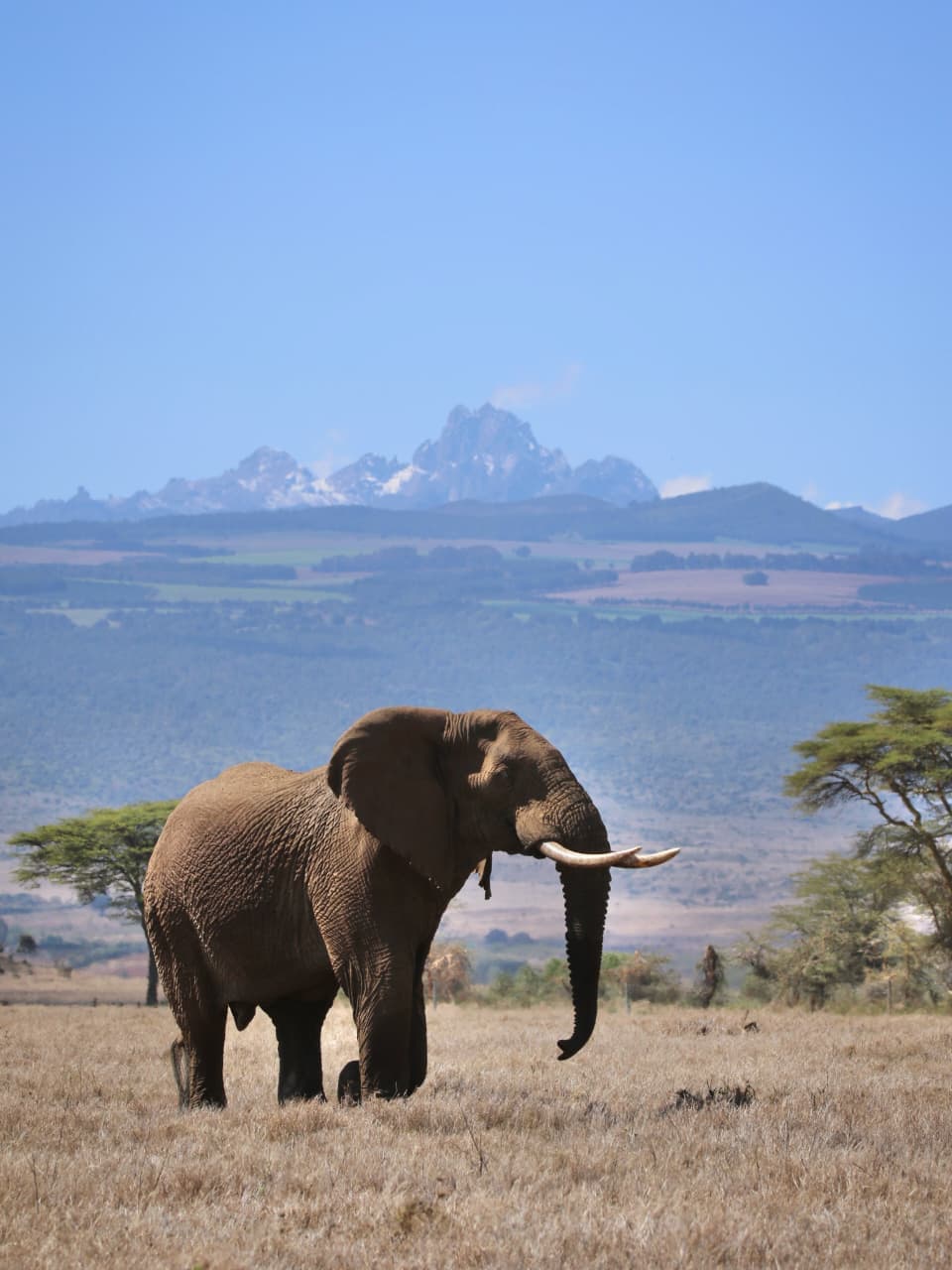
- Fauna emblemática: Lewa es el hogar de varias cebras de Grévy en peligro de extinción. Las praderas también albergan jirafas reticuladas, oryx beisa, elefantes, búfalos del Cabo y depredadores como leones, leopardos y guepardos.
- Actividades variadas: dependiendo de su alojamiento, puede realizar safaris matutinos y vespertinos, safaris a pie guiados con guardabosques armados, safaris nocturnos, safaris a caballo, paseos en camello y visitas a la sede de la reserva.
- Aspectos destacados de la Reserva de Vida Silvestre de Lewa
- La Reserva de Vida Silvestre de Lewa es famosa por su conservación de rinocerontes, su fauna rara, sus impresionantes paisajes del Monte Kenia y sus aventuras de safari únicas. Aquí están algunos de sus principales atractivos:
- Encuentros excepcionales con rinocerontes: Lewa es uno de los mejores lugares de Kenia para la conservación de rinocerontes, lo que le brinda la oportunidad de ver rinocerontes negros y blancos del sur en peligro de extinción en su hábitat natural.
- Cebras de Grévy en peligro de extinción: Visite una de las mejores áreas protegidas para la cebra de Grévy, conocida por sus rayas estrechas y grandes orejas.
- Avistamiento de los Cinco Grandes: Realice safaris guiados para buscar elefantes, leones, leopardos, búfalos y rinocerontes, así como guepardos, jirafas reticuladas y otros animales salvajes del norte de Kenia.
- Safari guiado exclusivo Experiencias: Explore Lewa con safaris privados, caminatas guiadas por la sabana, paseos a caballo o safaris en camello, según su alojamiento y la disponibilidad.
- Reconocimiento como Patrimonio Mundial de la UNESCO: Lewa forma parte del sitio Patrimonio Mundial del Monte Kenia, incluido en la lista de la UNESCO, desde 2013, lo que lo convierte en un lugar especial para la conservación.
- Alojamiento de lujo para safaris: Elija entre los mejores lugares para alojarse, como Sirikoi Lodge, Lewa Wilderness, Lewa Safari Camp, Lewa House y Kifaru House, todos ellos con un toque personal y estancias confortables.
- Paisajes espectaculares y avifauna: Explore las onduladas sabanas, acacias bosques, valles pintorescos, muchas clases de aves y vistas increíbles del Monte Kenia.
- Experiencias de conservación entre bastidores: Descubra cómo se protege a los rinocerontes, cómo se monitorea la vida silvestre y cómo funcionan los perros rastreadores y la educación para la conservación, con actividades especiales cuando estén disponibles.
- Conservación comunitaria y turismo sostenible: Descubra cómo Lewa apoya a las comunidades vecinas a través de la educación, la atención médica, el empleo, la protección de la vida silvestre y las iniciativas de desarrollo sostenible.
Principales beneficios de la reserva
- Avistamientos de rinocerontes sin igual: Prácticamente tiene garantizado ver rinocerontes aquí como resultado del trabajo de conservación en curso.
- Especies especiales del norte: Lewa tiene algunas especies de vida silvestre que son únicas del norte de Kenia, incluidas las cebras de Grévy, el oryx beisa y la jirafa reticulada.
- Actividades exclusivas de safari: recorridos nocturnos, safaris a pie, paseos a caballo y caminatas por las copas de los árboles en el bosque de Ngare Ndare.
- Alojamientos distintivos: las propiedades miembros más conocidas son Lewa Safari Camp, Lewa House, Sirikoi, Lewa Wilderness y Kifaru House.
Turismo responsable y código de conducta
Lewa combina una excelente seguridad contra la caza furtiva con el desarrollo comunitario, la atención médica y la creación de nuevos corredores para elefantes que conectan el Monte Kenia con las tierras de pastoreo del norte.
- Se requiere que los visitantes Siga las reglas de conservación de Lewa:
- La vida silvestre tiene un derecho de paso absoluto.
- Los vehículos deben mantener una distancia segura de todos los animales, en particular de los rinocerontes, elefantes y depredadores.
- Los safaris a pie siempre deben estar dirigidos por un guía armado autorizado.
- La conducción fuera de carretera solo está permitida en zonas designadas para proteger los pastos y suelos nativos.
Planifique su safari en Lewa con Halo Safaris & DMC
Puede combinar safaris en vehículos, experiencias especiales de conservación y alojamientos cuidadosamente seleccionados para un viaje privado por el norte de Kenia.
Explore nuestros Safaris aéreos personalizados en Kenia, consulte nuestra gama completa de Safaris en Kenia o contáctenos para planificar su viaje y obtener un presupuesto claro y detallado.
Descripción General del Parque
Campamentos y lodges en Safaris en el norte de Kenia.
Ashnil Samburu Camp
When people plan their first safari in Kenya, they usually begin by visiting the Maasai Mara. Northern Kenya, on the other hand, has dry red soil, palms by a broad river, and wildlife that you don't encounter further south. By staying at Ashnil Samburu Camp, you will find yourself on the banks of the Ewaso Nyiro River, in the Buffalo Springs National Reserve, right within the Samburu National Reserve, which lies directly opposite across the river.The Ashnil Samburu Camp is one of the camps and lodges that belong to the Ashnil Hotels group, which also has other establishments in game viewing areas all over Kenya; these other properties are the Ashnil Mara Camp close to the Mara River and the Ashnil Aruba Lodge in Tsavo East National Park.Getting to Samburu from NairobiThe Samburu trip begins in Nairobi; the camp is situated roughly 200 miles north of the city, and you may reach it by air or by road.By flight: a scheduled flight from Wilson Airport to Buffalo Springs Airstrip lasts approximately one hour. Once you arrive at the airstrip, our team will meet you and drive you to the camp. Since flights depart from Wilson Airport, you should plan for the drive across Nairobi. Flying allows you to see the game for an additional half day. If you want a smooth arrangement for air travel, consider our fly-in safari options, which go directly from Nairobi's Wilson Airport to Buffalo Springs Airstrip.By road: a 4x4 safari vehicle will take you 5 to 6 hours to reach the camp via Nanyuki and Isiolo, and driving is suitable for those who wish to stop at Ol Pejeta or Mount Kenya en route.Tents accommodationThe Ashnil Samburu Camp consists of 30 hexagonal tents arranged along a shaded part of the riverbank. Since each tent is built on a raised wooden platform with its face towards the Ewaso Nyiro, elephants and baboons are often seen when you are outside your tent.Deluxe Double18One king-size bedCouples and honeymoonersDeluxe Twin9Two single beds, rollaway optionFriends or a parent with a childDeluxe Triple3Three single bedsSmall families or groupsA double tent has a surface area of about 310 square feet and includes parquet floors, mosquito nets, a writing desk, a wardrobe, a fan, an in-room safe and a hair dryer. Each tent is equipped with an en-suite bathroom having a hot shower and a flush toilet, and we do provide tents that have been adapted for guests with disabilities.Dining at campThe restaurant situated outside has a capacity of 100 seats and provides buffets featuring both international and African food; in addition, lunches and dinners are available on a menu basis, a facility that is rare among the camps in the region. The kitchen can also prepare vegetarian, vegan, gluten-free and halal meals provided that they are requested in advance.Wildlife on a Samburu safariWhat mainly attracts visitors on a Samburu safari is the Samburu Special Five. These species, which are adapted to dry environments, are rare or missing in southern Kenya:The Grevy's zebra is larger than the plains zebra, has narrow stripes and round ears, and is an endangered species.The reticulated giraffe has a distinct, net-like pattern of liver-red patches.The Somali ostrich has blue-grey necks and legs.The Beisa oryx is a type of desert antelope which has long, straight horns.The gerenuk is an antelope with a long neck which feeds by standing on its back legs.Lions, leopards and cheetahs are found in both reserves, together with elephants, buffalo, hippos and spotted hyenas, and at certain times African wild dogs are seen there too.Activities at the campDay after day, your routine matches that of the bush, involving game drives during the cooler parts of the day and allowing you the opportunity to rest at camp when the midday heat arrives. The following activities are available to you during your stay.Game drivesYou can drive across Buffalo Springs and Samburu National Reserve in an open 4x4 vehicle, which has a guide for both morning and evening drives. If you go early, you will see the predators when they are still active, and in the evenings the elephants come down to the river to drink. You have to pay the entrance fees for each of the reserves. The animals are free to move across the river, and since you have access to both sides, your guide is able to cover more ground when animal sightings are scarce.Guided nature walksWhen walking, you become aware of the various things that a vehicle passes by, such as animal tracks, insects, plants, and the sounds of the riverbank. Each walk is led by a guide, who explains all the findings as you go. The walks carry an extra cost.BirdwatchingMore than 350 species of birds can be seen in the area, such as the vulturine guineafowl and the lilac-breasted roller. The trees beside the Ewaso Nyiro close to the camp are a good place to begin, so make sure your binoculars are with you.Samburu village visit and cultural eveningsThe Samburu are semi-nomadic herders who are closely related to the Maasai, and a number of our guides and staff are drawn from the local communities. If you want to see what daily life is like in a manyatta, you can visit a nearby village where you can buy beadwork straight from the women who produce it. At the camp, we have cultural talks and traditional dances in the evening.Bush breakfast and picnic lunchRather than going back to the camp after your morning drive, you might have breakfast in the reserve, and having a picnic lunch will allow you to remain out there for a longer period on a full-day drive.Sundowners and bush dinnersFinish the day by having drinks at a lookout that looks towards Ololokwe Mountain as the sun sets. If it is to be a special night, our staff will arrange a bush dinner or barbecue using lanterns.Swimming pool and spaWhile driving, the pool deck has a view of the river, with elephants and impala frequently coming there to drink. The spa provides massages and other treatments to relieve the muscle strain caused by spending long hours in the vehicle.When to visit SamburuIf you want to see wildlife, you should go between June and October and from January to February since the grass is shorter and so the animals are easier to spot; they gather along the river, which is the only reliable source of water. April and May, on the other hand, see the long rains; the landscape becomes greener, and there are fewer vehicles.Children’s policyThe Ashnil Samburu Camp is open to children of all ages, and the price you pay will be determined by the age of the children and the way in which they share a tent.Up to 3 yearsFreeAges 4 to 12, sharing with adults50% of the adult rateTwo children in their own tent75% of the adult rate eachThree children in their own tentFull double-tent rateOne adult with one childAdult single rate plus 50% of the half-twin rateIf you are going on a trip with children, you should refer to our guide regarding family safari packages to find out more about age restrictions, child-friendly lodging, and the special activities arranged.Practical tips for your tripFor tips and additional charges, please provide US dollars in the form of fresh and recently printed bills; card payments might be subject to an extra charge.Since Kenya uses three-pin plugs of the UK type (Type G), it's necessary to take an adapter with you.At least six weeks before your trip, go to a travel clinic to get information on malaria tablets and yellow fever vaccination.Take along some lightweight, neutral-coloured clothing, a hat, sunscreen, and binoculars.Check-in will begin at noon, and check-out must be completed by 10 A.M.Plan your Samburu safariAshnil Samburu Camp works well as the northern leg of your trip, before or after the Maasai Mara. Check dates and book your stay at Ashnil Samburu Camp with us today.
Escenas de Reserva de vida silvestre de Lewa
Cuéntenos sobre el viaje.
Un especialista en destinos le responderá en el plazo de un día hábil con una propuesta a medida.
¿Está planificando un safari? Use nuestro diseñador de viajes para crear un itinerario a medida.