


Réserve faunique de Lewa
La réserve a acquis une importance internationale en tant que principal centre de reproduction et source de rhinocéros pour leur réintroduction au Kenya. Son action actuelle comprend la protection de l'habitat, l'éducation communautaire, le soutien aux soins de santé et le développement de partenariats en matière de sécurité.
En 2013, l'UNESCO a étendu le site du patrimoine mondial du Parc national et de la Forêt naturelle du Mont Kenya pour y inclure la réserve de Lewa Wildlife Conservancy et la réserve forestière de Ngare Ndare. Lewa fait donc partie intégrante du site UNESCO plus vaste ; il ne s'agit pas d'un site distinct.
Où se trouve-t-elle ?
Lewa se situe dans le comté de Meru, au sud d'Isiolo et au nord du Mont Kenya, à la limite nord de l'écosystème de Laikipia, au Kenya.
La réserve s'étend sur environ 62 000 acres et comprend des terres privées ainsi que des habitats dans la forêt adjacente de Ngare Ndare. C'est une petite zone abritant une grande variété d'habitats, notamment la savane ouverte, les zones humides, les forêts d'acacias et des vues sur le mont Kenya.
Nanyuki et Isiolo sont les principales villes de la région. Séjourner à Lewa est idéal pour visiter la réserve de Borana, la réserve nationale de Samburu ou encore pour un voyage plus long dans le nord du Kenya. Comment s'y rendre ? Par la route : depuis Nairobi, passez par Thika, Karatina, Naro Moru, Nanyuki, Timau, puis dirigez-vous vers Isiolo au carrefour Meru/Isiolo. Comptez environ 4 à 5 heures (260 km) si les routes sont en bon état, mais tenez compte de la circulation à Nairobi, car les routes peuvent être très accidentées. Par avion : Safari Link et Air Kenya proposent des vols quotidiens depuis l'aéroport Wilson (WIL) de Nairobi jusqu'à Lewa Downs. Le vol dure généralement entre 45 et 60 minutes, mais peut être plus long en cas d'escale.
Pistes d'atterrissage
La piste d'atterrissage de Lewa Downs (LWA) est le principal point d'accès aérien de la réserve, avec des vols réguliers quotidiens et des vols charters privés agréés.
Principales attractions
La conservation des rhinocéros est le principal attrait de Lewa. Des rhinocéros noirs et des rhinocéros blancs du Sud y sont protégés 24 h/24, et vous avez une réelle opportunité d'observer une espèce menacée en voie de rétablissement. Les guides vous expliqueront la différence entre le rhinocéros noir (un brouteur) et le rhinocéros blanc (un herbivore), tout en gardant bien sûr une distance de sécurité.
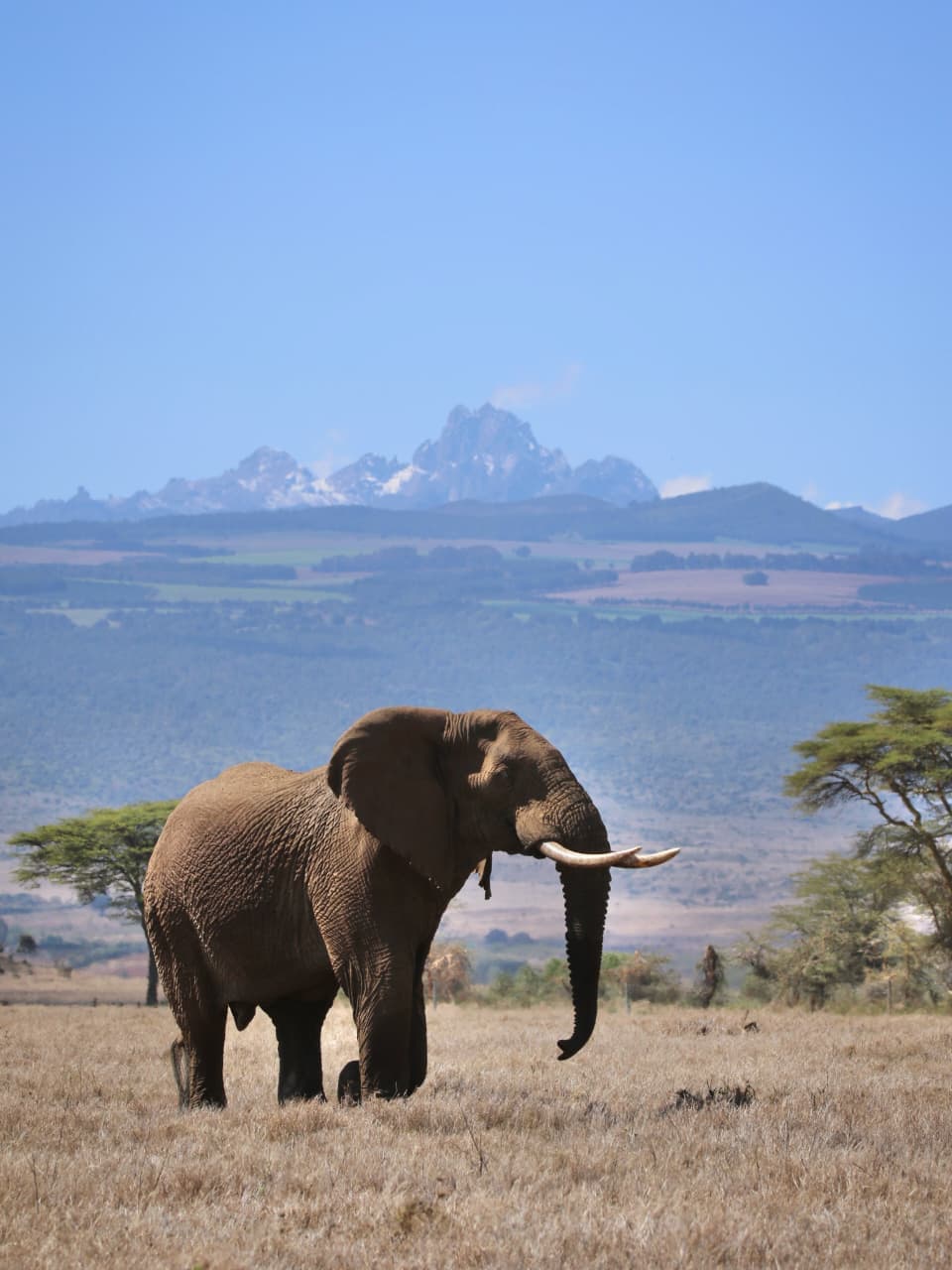
- Faune emblématique : Lewa abrite un certain nombre de zèbres de Grévy en voie de disparition. Les prairies abritent également des girafes réticulées, des oryx beisa, des éléphants, des buffles du Cap et des prédateurs tels que des lions, des léopards et des guépards.
- Activités variées : selon votre lodge, vous pouvez effectuer des safaris en véhicule le matin et l’après-midi, des safaris à pied guidés avec des rangers armés, des safaris nocturnes, des safaris à cheval, des promenades à dos de chameau et des visites au siège de la réserve.
- Points forts de la réserve de faune de Lewa
- La réserve de faune de Lewa est célèbre pour la conservation des rhinocéros, sa faune rare, les paysages époustouflants du mont Kenya et ses safaris uniques. Voici quelques-uns de ses points forts :
- Rencontres exceptionnelles avec les rhinocéros : Lewa est l’un des meilleurs sites du Kenya pour la conservation des rhinocéros, vous offrant la possibilité d’observer des rhinocéros noirs et des rhinocéros blancs du Sud, espèces menacées, dans leur habitat naturel.
- Zèbres de Grévy, espèces menacées : Visitez l’une des meilleures zones protégées pour le zèbre de Grévy, une espèce menacée, reconnaissable à ses rayures fines et à ses grandes oreilles.
- Observation des « Big Five » : Participez à des safaris guidés à la recherche d’éléphants, de lions, de léopards, de buffles et de rhinocéros, ainsi que de guépards, de girafes réticulées et d’autres animaux sauvages du nord du Kenya.
- Safari guidé exclusif Expériences : Explorez Lewa lors de safaris privés, de randonnées guidées dans le bush, de promenades à cheval ou de safaris à dos de chameau, selon votre lodge et les activités disponibles.
- Reconnaissance au patrimoine mondial de l'UNESCO : Lewa fait partie du site du Mont Kenya, inscrit au patrimoine mondial de l'UNESCO, depuis 2013, ce qui en fait un lieu privilégié pour la conservation.
- Hébergement de luxe pour safaris : : Choisissez parmi des hébergements de renom tels que Sirikoi Lodge, Lewa Wilderness, Lewa Safari Camp, Lewa House et Kifaru House, offrant tous un accueil personnalisé et un confort optimal.
- Paysages et avifaune spectaculaires : Explorez les savanes vallonnées et les forêts d'acacias Forêts, vallées pittoresques, une grande variété d'oiseaux et des vues imprenables sur le mont Kenya.
- Expériences de conservation en coulisses : Découvrez comment les rhinocéros sont protégés, comment la faune sauvage est surveillée et comment fonctionnent les chiens pisteurs et l'éducation à la conservation, avec des activités spéciales selon les disponibilités.
- Conservation communautaire et tourisme durable : Découvrez comment Lewa soutient les communautés voisines par le biais de l'éducation, des soins de santé, de l'emploi, de la protection de la faune et d'initiatives de développement durable.
Principaux avantages de la réserve
- Observations de rhinocéros exceptionnelles : Vous avez la quasi-certitude d'en apercevoir. des rhinocéros ici grâce au travail de conservation en cours.
- Espèces spécifiques du Nord : Lewa possède une faune unique au nord du Kenya, notamment des zèbres de Grévy, des oryx Beisa et des girafes réticulées.
- Activités safari exclusives : safaris nocturnes, safaris à pied, équitation et promenades sur la canopée dans la forêt de Ngare Ndare.
- Logements d'exception : les établissements membres les plus réputés sont Lewa Safari Camp, Lewa House, Sirikoi, Lewa Wilderness et Kifaru House.
Tourisme responsable et code de conduite
Lewa allie une excellente sécurité anti-braconnage au développement communautaire, aux soins de santé et à la création de nouveaux corridors pour les éléphants reliant le mont Kenya aux pâturages du nord.
- Les visiteurs sont tenus de respecter Règles de conservation de Lewa :
- La faune sauvage a la priorité absolue.
- Les véhicules doivent maintenir une distance de sécurité avec tous les animaux, en particulier les rhinocéros, les éléphants et les prédateurs.
- Les safaris à pied doivent toujours être accompagnés d'un guide armé agréé.
- La conduite hors piste est autorisée uniquement dans les zones désignées afin de protéger la végétation et les sols indigènes.
Planifiez votre safari à Lewa avec Halo Safaris ! DMC
Vous pouvez combiner safaris, expériences de conservation uniques et lodges soigneusement sélectionnés pour un voyage privé dans le nord du Kenya.
Explorez nos Safaris aériens au Kenya sur mesure, consultez notre gamme complète de Safaris au Kenya, ou contactez-nous pour planifier votre voyage et obtenir un devis clair et détaillé.
Aperçu du Parc
Camps et lodges à Safaris dans le nord du Kenya.
Ashnil Samburu Camp
When people plan their first safari in Kenya, they usually begin by visiting the Maasai Mara. Northern Kenya, on the other hand, has dry red soil, palms by a broad river, and wildlife that you don't encounter further south. By staying at Ashnil Samburu Camp, you will find yourself on the banks of the Ewaso Nyiro River, in the Buffalo Springs National Reserve, right within the Samburu National Reserve, which lies directly opposite across the river.The Ashnil Samburu Camp is one of the camps and lodges that belong to the Ashnil Hotels group, which also has other establishments in game viewing areas all over Kenya; these other properties are the Ashnil Mara Camp close to the Mara River and the Ashnil Aruba Lodge in Tsavo East National Park.Getting to Samburu from NairobiThe Samburu trip begins in Nairobi; the camp is situated roughly 200 miles north of the city, and you may reach it by air or by road.By flight: a scheduled flight from Wilson Airport to Buffalo Springs Airstrip lasts approximately one hour. Once you arrive at the airstrip, our team will meet you and drive you to the camp. Since flights depart from Wilson Airport, you should plan for the drive across Nairobi. Flying allows you to see the game for an additional half day. If you want a smooth arrangement for air travel, consider our fly-in safari options, which go directly from Nairobi's Wilson Airport to Buffalo Springs Airstrip.By road: a 4x4 safari vehicle will take you 5 to 6 hours to reach the camp via Nanyuki and Isiolo, and driving is suitable for those who wish to stop at Ol Pejeta or Mount Kenya en route.Tents accommodationThe Ashnil Samburu Camp consists of 30 hexagonal tents arranged along a shaded part of the riverbank. Since each tent is built on a raised wooden platform with its face towards the Ewaso Nyiro, elephants and baboons are often seen when you are outside your tent.Deluxe Double18One king-size bedCouples and honeymoonersDeluxe Twin9Two single beds, rollaway optionFriends or a parent with a childDeluxe Triple3Three single bedsSmall families or groupsA double tent has a surface area of about 310 square feet and includes parquet floors, mosquito nets, a writing desk, a wardrobe, a fan, an in-room safe and a hair dryer. Each tent is equipped with an en-suite bathroom having a hot shower and a flush toilet, and we do provide tents that have been adapted for guests with disabilities.Dining at campThe restaurant situated outside has a capacity of 100 seats and provides buffets featuring both international and African food; in addition, lunches and dinners are available on a menu basis, a facility that is rare among the camps in the region. The kitchen can also prepare vegetarian, vegan, gluten-free and halal meals provided that they are requested in advance.Wildlife on a Samburu safariWhat mainly attracts visitors on a Samburu safari is the Samburu Special Five. These species, which are adapted to dry environments, are rare or missing in southern Kenya:The Grevy's zebra is larger than the plains zebra, has narrow stripes and round ears, and is an endangered species.The reticulated giraffe has a distinct, net-like pattern of liver-red patches.The Somali ostrich has blue-grey necks and legs.The Beisa oryx is a type of desert antelope which has long, straight horns.The gerenuk is an antelope with a long neck which feeds by standing on its back legs.Lions, leopards and cheetahs are found in both reserves, together with elephants, buffalo, hippos and spotted hyenas, and at certain times African wild dogs are seen there too.Activities at the campDay after day, your routine matches that of the bush, involving game drives during the cooler parts of the day and allowing you the opportunity to rest at camp when the midday heat arrives. The following activities are available to you during your stay.Game drivesYou can drive across Buffalo Springs and Samburu National Reserve in an open 4x4 vehicle, which has a guide for both morning and evening drives. If you go early, you will see the predators when they are still active, and in the evenings the elephants come down to the river to drink. You have to pay the entrance fees for each of the reserves. The animals are free to move across the river, and since you have access to both sides, your guide is able to cover more ground when animal sightings are scarce.Guided nature walksWhen walking, you become aware of the various things that a vehicle passes by, such as animal tracks, insects, plants, and the sounds of the riverbank. Each walk is led by a guide, who explains all the findings as you go. The walks carry an extra cost.BirdwatchingMore than 350 species of birds can be seen in the area, such as the vulturine guineafowl and the lilac-breasted roller. The trees beside the Ewaso Nyiro close to the camp are a good place to begin, so make sure your binoculars are with you.Samburu village visit and cultural eveningsThe Samburu are semi-nomadic herders who are closely related to the Maasai, and a number of our guides and staff are drawn from the local communities. If you want to see what daily life is like in a manyatta, you can visit a nearby village where you can buy beadwork straight from the women who produce it. At the camp, we have cultural talks and traditional dances in the evening.Bush breakfast and picnic lunchRather than going back to the camp after your morning drive, you might have breakfast in the reserve, and having a picnic lunch will allow you to remain out there for a longer period on a full-day drive.Sundowners and bush dinnersFinish the day by having drinks at a lookout that looks towards Ololokwe Mountain as the sun sets. If it is to be a special night, our staff will arrange a bush dinner or barbecue using lanterns.Swimming pool and spaWhile driving, the pool deck has a view of the river, with elephants and impala frequently coming there to drink. The spa provides massages and other treatments to relieve the muscle strain caused by spending long hours in the vehicle.When to visit SamburuIf you want to see wildlife, you should go between June and October and from January to February since the grass is shorter and so the animals are easier to spot; they gather along the river, which is the only reliable source of water. April and May, on the other hand, see the long rains; the landscape becomes greener, and there are fewer vehicles.Children’s policyThe Ashnil Samburu Camp is open to children of all ages, and the price you pay will be determined by the age of the children and the way in which they share a tent.Up to 3 yearsFreeAges 4 to 12, sharing with adults50% of the adult rateTwo children in their own tent75% of the adult rate eachThree children in their own tentFull double-tent rateOne adult with one childAdult single rate plus 50% of the half-twin rateIf you are going on a trip with children, you should refer to our guide regarding family safari packages to find out more about age restrictions, child-friendly lodging, and the special activities arranged.Practical tips for your tripFor tips and additional charges, please provide US dollars in the form of fresh and recently printed bills; card payments might be subject to an extra charge.Since Kenya uses three-pin plugs of the UK type (Type G), it's necessary to take an adapter with you.At least six weeks before your trip, go to a travel clinic to get information on malaria tablets and yellow fever vaccination.Take along some lightweight, neutral-coloured clothing, a hat, sunscreen, and binoculars.Check-in will begin at noon, and check-out must be completed by 10 A.M.Plan your Samburu safariAshnil Samburu Camp works well as the northern leg of your trip, before or after the Maasai Mara. Check dates and book your stay at Ashnil Samburu Camp with us today.
Scènes de Réserve faunique de Lewa
Parlez-nous de votre voyage.
Un spécialiste des destinations vous répondra dans un délai d'un jour ouvrable avec une proposition sur mesure.
Vous préparez un safari ? Utilisez notre créateur de voyage pour concevoir un itinéraire sur mesure.